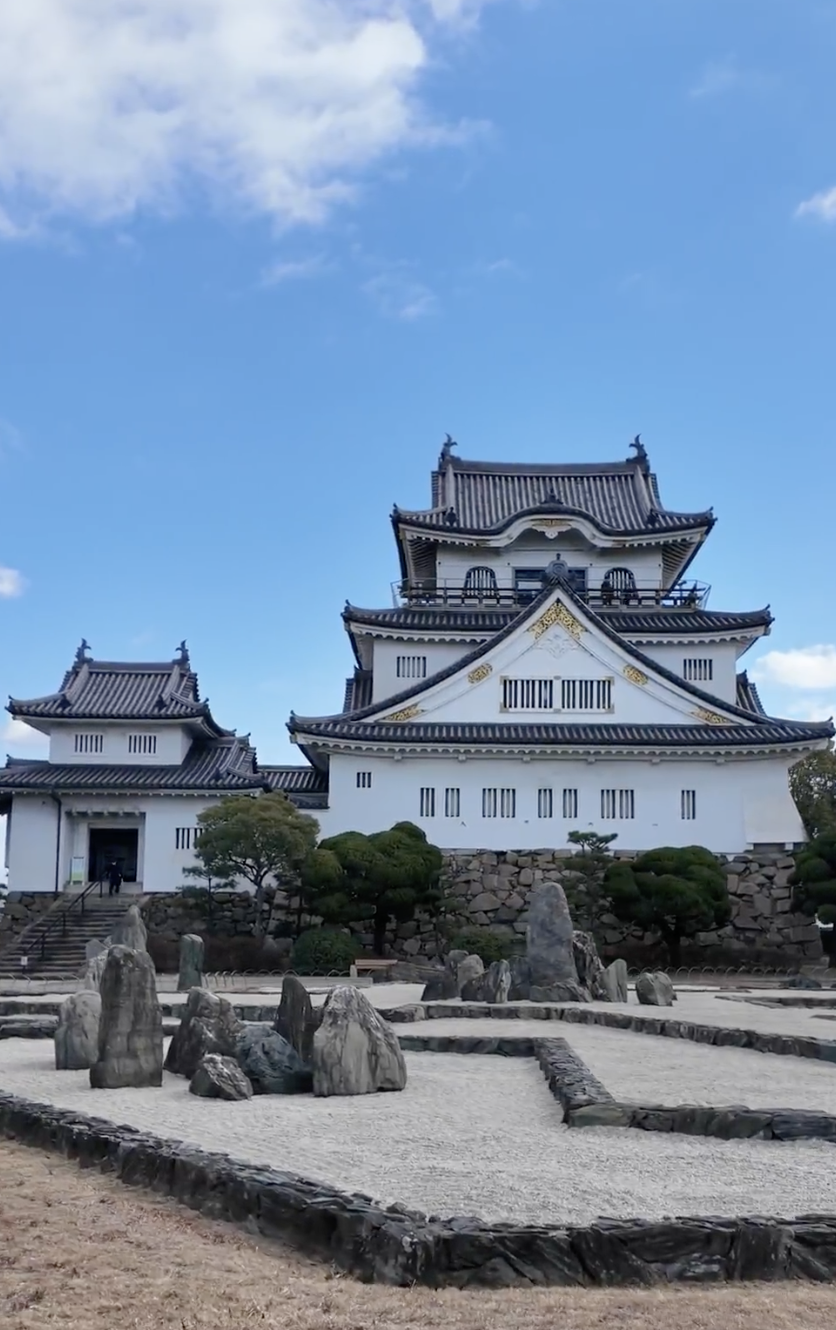
Located in Kishiwada City, Kishiwada Castle is a tranquil and historically significant coastal fortress. Originally established in the 16th century, it served as a crucial southern defense line for Osaka, guarding against powerful factions from the Kii Province (modern-day Wakayama). The castle famously withstood a massive siege by the formidable Negoro and Saika mercenary forces in 1584 during the Battle of Kishiwada. Throughout the Edo period, it was governed by the Okabe clan and stood as the political heart of the Kishiwada Domain. While the current three-story keep was rebuilt in 1954, the extensive moat and imposing original stone walls offer a genuine glimpse into Japan's feudal past. The grounds also feature the "Hachijin no Niwa," a nationally designated scenic rock garden. In this guide, I break down the castle's historical architecture and how to navigate there.
Kishiwada Castle offers a peaceful environment to appreciate traditional Japanese castle architecture and garden design without the massive crowds found at larger landmarks.
-
The Castle Keep (天守閣): Originally a five-story structure that was struck by lightning and destroyed in 1827, the keep was rebuilt as a three-story structure in 1954 to serve as a museum. Inside, visitors can view historical artifacts, armor, and documents related to the Okabe clan and the castle's history. The top floor provides a 360-degree panoramic view of Osaka Bay to the west and the Katsuragi mountain range to the east.
-
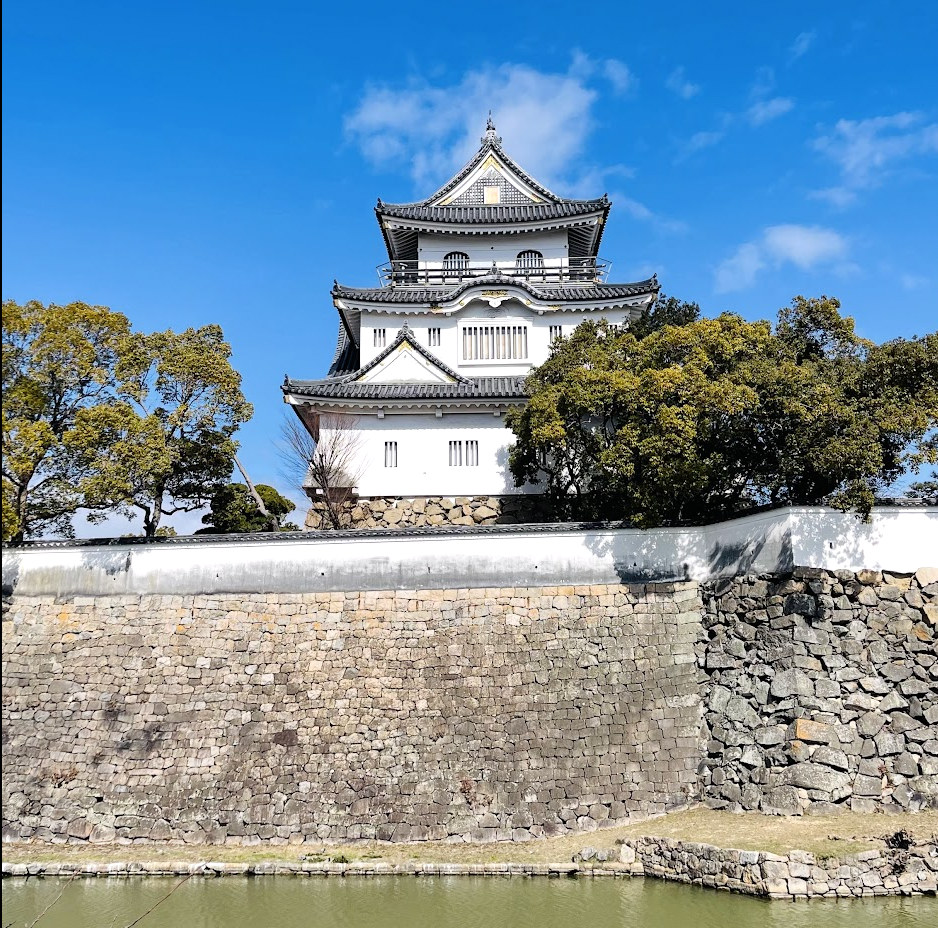
Original Stone Walls and Moat (石垣とお堀): The most historically authentic parts of the castle are its defensive walls and the wide moat, which largely retain their 16th-century layout. The "Inuzumi" (dog-run) style of the stone walls—where the stones curve outward slightly near the bottom for enhanced stability—is a testament to the advanced masonry skills of the feudal era.
-
Hachijin no Niwa (八陣の庭): Designed in 1953 by the legendary garden architect Mirei Shigemori, this modern Zen rock garden pays homage to history. The stones are arranged according to the "Eight Battle Formations," an ancient Chinese military strategy devised by Zhuge Liang. It is a rare example of a garden specifically designed to be viewed from above (from the top of the castle keep).
Gallery
.jpg)
.jpg)
.jpg)