Recommended Spots
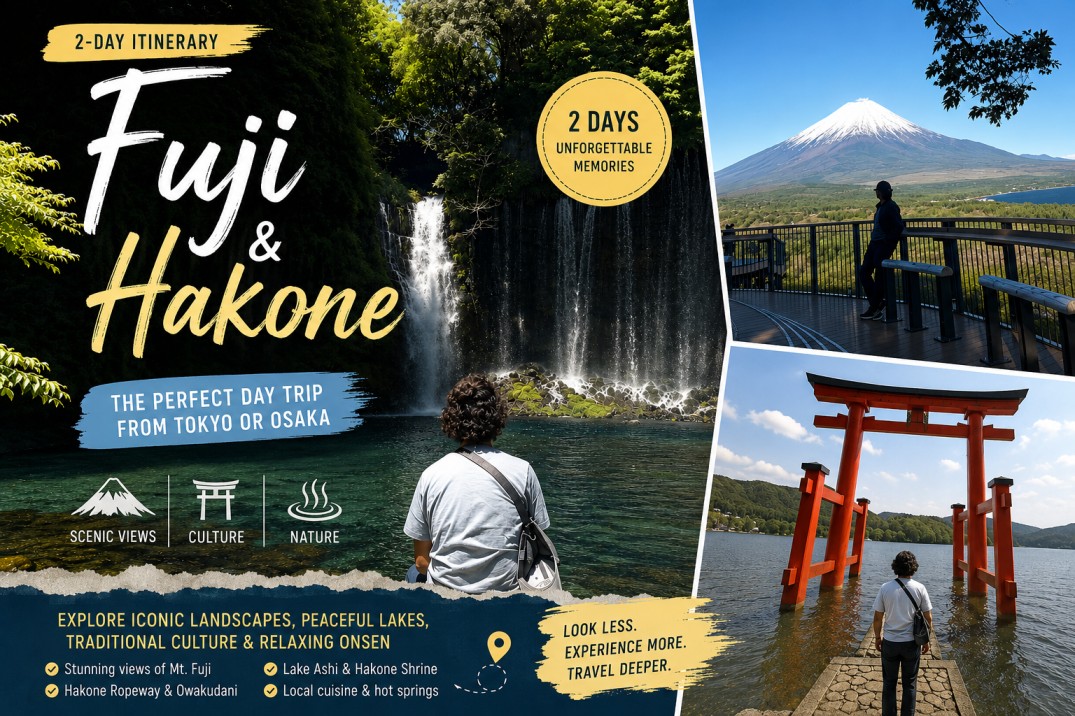
Discovering Mount Fuji: A Hakone and Five Lakes Journey
This travel album captures a complete road trip circuit around Hakone and the Fuji Five Lakes starting from Mishima Station. While you can adapt this loop to start from any point that fits your schedule, this guide outlines the exact route, stops, and highlights experienced along the way. The journey begins by picking up a rental car at Mishima Station and heading straight to the first stop, Lake Ashi in Hakone. While heavy fog obscured Mount Fuji during this visit, clear days offer an iconic view of the mountain behind the famous lakeside torii gate (be prepared for a queue for photo opportunities). From the lake, head up to the volcanic valley of Owakudani to explore the active vents, check out the museum, and sample the famous longevity-giving black eggs (kuro-tamago). The route then heads north toward Lake Yamanaka for an overnight stay. As evening sets in, clearing skies reveal stunning views of Mount Fuji over the water. Day two kicks off early at Nagaike Water Park along Lake Yamanaka’s northern shore for scenic reflections, followed by sweeping elevated vistas from the Yamanakako Panorama-dai viewpoint. From there, head to the iconic Chureito Pagoda (Arakurayama Sengen Park) for classic postcard-worthy views, followed by a scenic drive around Lake Kawaguchiko and the surrounding Fuji Five Lakes with stops at key viewpoints along the shore. The journey wraps up with a visit to the cascading waters of Shiraito Falls, with the option to explore the nearby Narusawa Ice Cave if time permits.
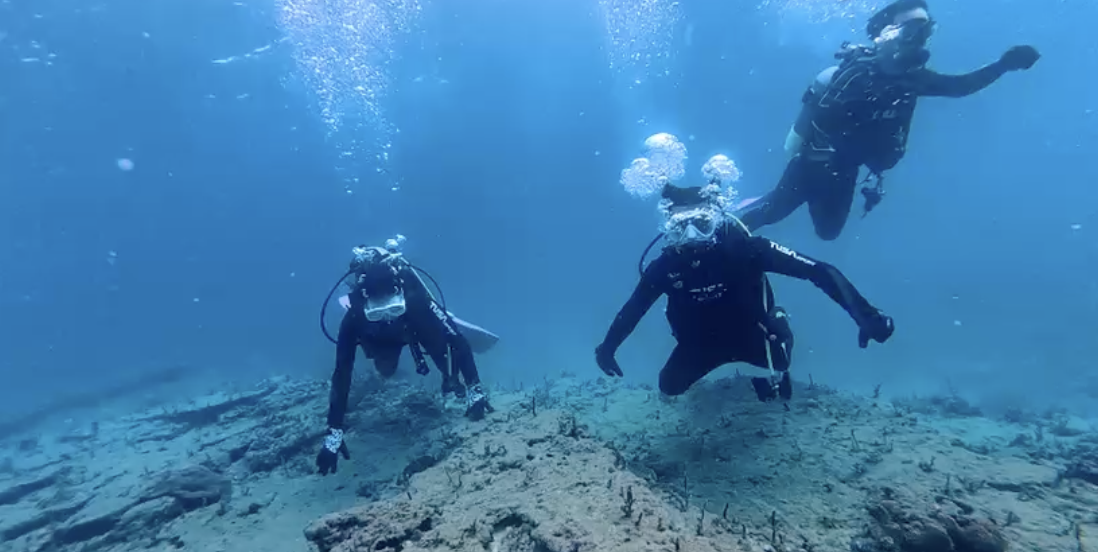
Shirahama Underwater: Discovering Wakayama's Ocean Magic at Blue Life Diving
While Wakayama’s Shirahama is globally famous for its brilliant white-sand beach and relaxing hot springs, the real magic lies beneath the surface of the Pacific. I recently packed my bags and headed down to the coast to take on a PADI Discover Scuba Diving course with Blue Life Diving. What started as a simple introductory dive turned into an absolute highlight of my year, entirely thanks to the owner, Kotoko. Her warmth, expertise, and infectious passion for the ocean completely elevated our experience from a standard tour to a highly personalized adventure. We drove down from Osaka for the day, but the shop also offers a super convenient pick-up service directly from Shirahama Station if you are traveling by train. If you are looking for an unforgettable, thrilling activity in Shirahama, here is a deep dive into Wakayama's underwater world. The Experience: Diving with Blue Life If you have never breathed underwater before, taking the plunge can feel intimidating. The ocean is vast, and trusting the equipment goes against human instinct. That is exactly why choosing the right dive shop is critical. We booked the PADI Discover Scuba Diving course with Blue Life Diving, a program specifically designed for complete beginners to safely experience the ocean without needing a full, multi-day certification. From the moment we arrived at the shop, the owner, Kotoko, set an incredible tone for the day. She is exactly the kind of instructor you want by your side when trying something completely out of your comfort zone. Kotoko wasn't just "helpful"; she was deeply attentive, immensely patient, and radiated a calming confidence that instantly put us at ease. Before we even touched the water, she took the time to thoroughly explain the gear mechanics, the proper breathing techniques, and the underwater hand signals. By the time we waded into the shallows, all our preliminary nerves had melted away. Once we descended, the world transformed. Thanks to the warm Kuroshio Current that sweeps past the Wakayama coast, Shirahama's waters are surprisingly clear and vibrantly alive with tropical marine life. Kotoko was right there beside us every second, expertly adjusting our buoyancy and guiding us through intricate rock formations. She actively pointed out schools of colorful fish, hidden sea slugs, and fascinating corals we would have otherwise entirely missed. She transformed the dive from a standard "follow the leader" guided tour into a joyous, personalized ocean adventure. Her absolute dedication to ensuring we felt entirely safe while having the time of our lives is what makes Blue Life Diving a must-visit in Shirahama.Blue Life Diving Instagram: https://www.instagram.com/bluelife_divingInstructor Kotoko Instagram: https://www.instagram.com/39kotoko/Blue Life Diving Website: https://www.diving-bluelife.com/
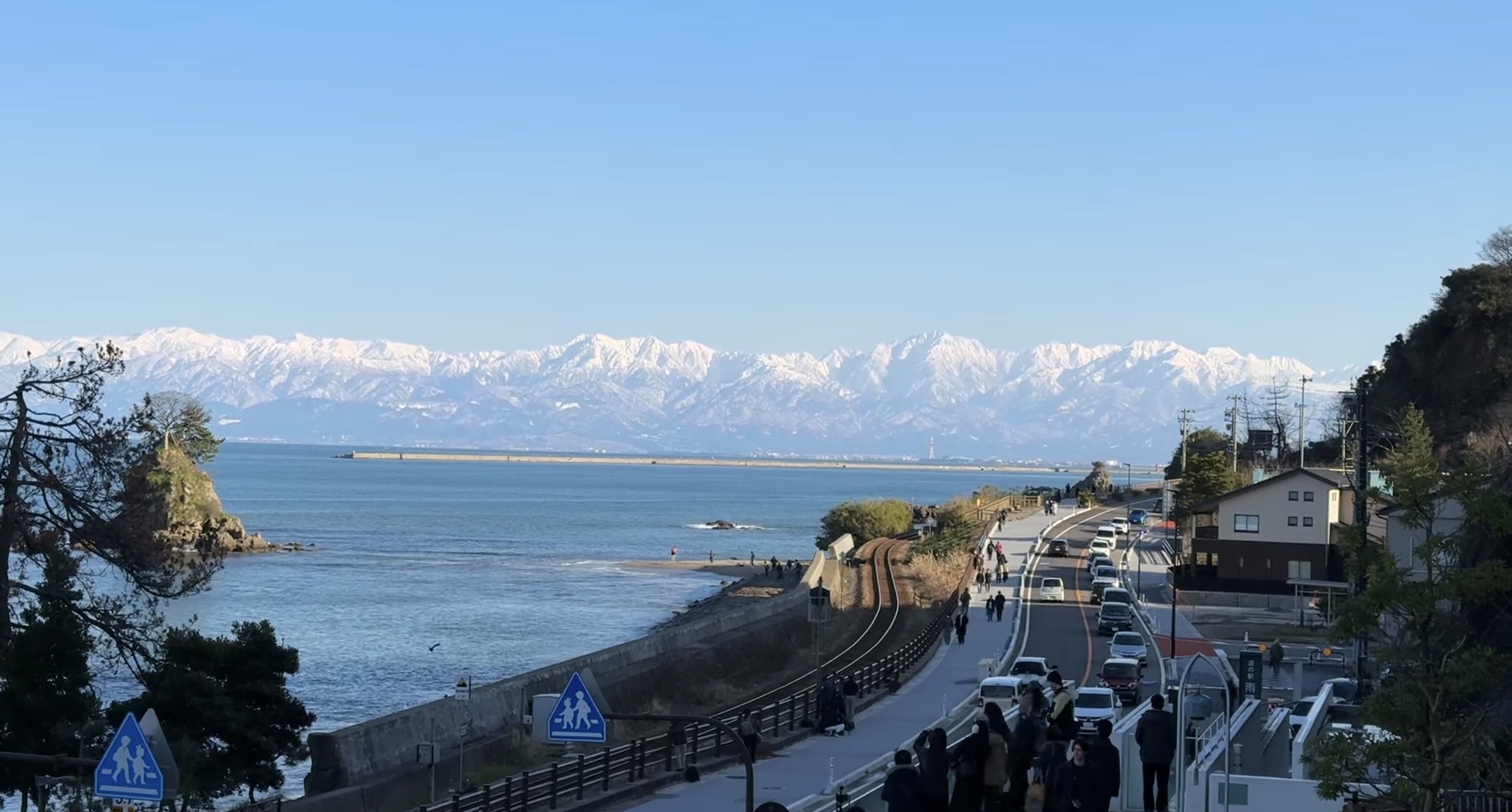
Amaharashi Coast: Breathtaking Ocean Views and the Tateyama Mountain Range
Walk the Amaharashi Coast Promenade in Toyama Prefecture. Experience world-class views of the Tateyama Mountain Range across the ocean, Yoshitsune Rock, and a beautiful seaside route.Looking for one of the most breathtaking coastal views in Japan? Located in Toyama Prefecture, the Amaharashi Coast Promenade (雨晴海岸遊歩道) offers a stunning walking path right along the Sea of Japan. The coast is famous for its striking view of Yoshitsune Rock rising from the ocean, framed perfectly against the snow-capped 3,000-meter peaks of the Tateyama Mountain Range across Toyama Bay. This rare geographical alignment makes it a dream spot for photographers and nature lovers. Stop by the beautifully designed Michi-no-Eki Amaharashi (Roadside Station) along the way to grab a coffee, hit the observation deck, and take in the panoramic ocean breeze.
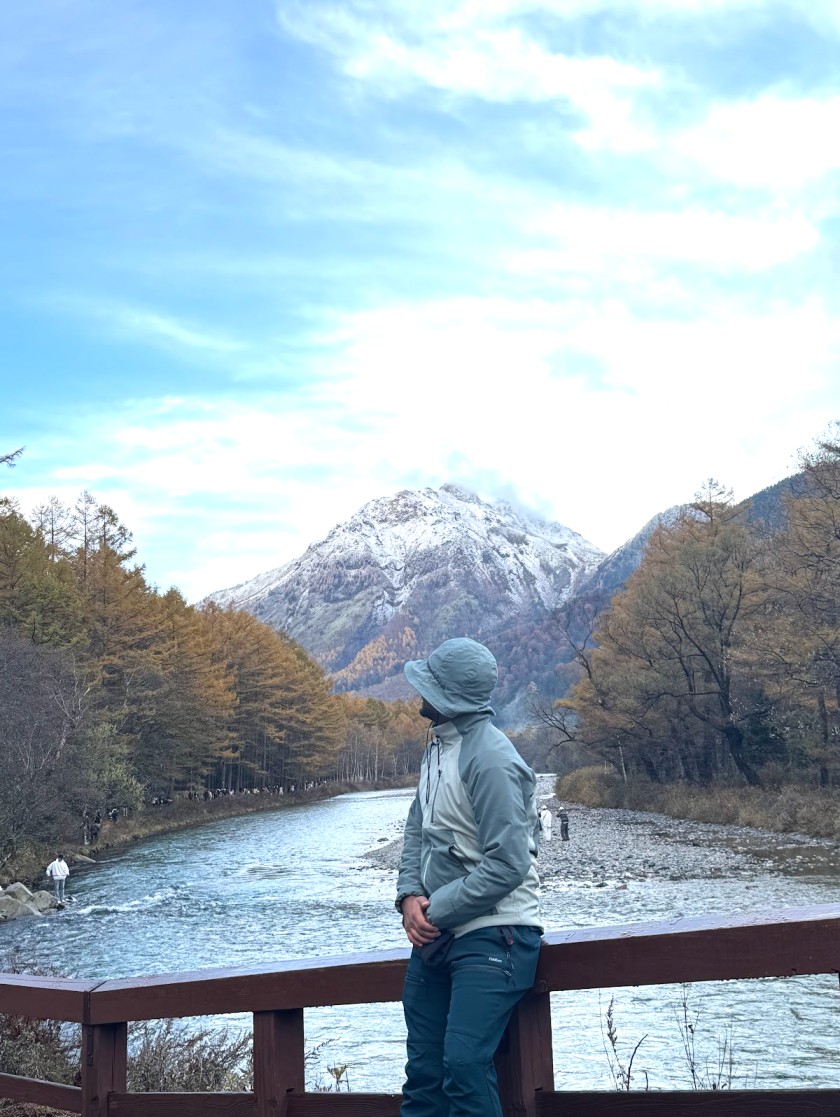
Kamikochi: The Ultimate Alpine Camping Experience from Osaka & Tokyo
While the cities of Osaka and Tokyo are universally famous for their bustling energy, the serene alpine valley of Kamikochi (上高地) offers a completely different, breathtaking kind of beauty. Nestled high in the Northern Japan Alps, this untouched national park is a sanctuary of crystal-clear rivers, vibrant marshlands, and dramatic alpine peaks. Because of a strict ban on private cars to protect the delicate environment, Kamikochi remains a remarkably pristine escape. The transition into the valley often begins with a scenic approach through the gateway town of Hirayu—home to the thundering 64-meter Hirayu Otaki waterfall and rejuvenating natural hot springs. From the staging parking areas, visitors transfer by bus or taxi, crossing into a high-altitude world entirely separated from modern urban life. The sightseeing routes in Kamikochi are perfectly suited for leisurely valley strolls that deeply immerse visitors in the alpine ecosystem. One of the most rewarding paths is the Myojin Bridge to Kappa Bridge hiking circuit. This 2 to 3-hour loop winds through emerald-green forests, tranquil ponds, and quiet wetlands lying directly beneath the jagged ridges of the Hotaka Mountain range. In this comprehensive guide, you will find everything you need to know to plan the ultimate alpine getaway. It breaks down the exact drive logistics (including mapcodes for parking lots whether you are coming from Osaka or Tokyo), the precise latitude and longitude of Kamikochi, and the crucial open and closed season windows. Top Highlights of the Region: Konashidaira Campsite (小梨平キャンプ場): The perfect staging ground for an alpine adventure. Located just a short walk past the iconic Kappa Bridge, this expansive site sits right beside the icy, incredibly translucent waters of the Azusa River. Surrounded by larch and birch forests, it offers a front-row seat to the towering Hotaka mountains, where the morning mist rolling off the river creates an ethereal, painting-like atmosphere. Myojin Bridge Circuit (明神橋サーキット): A visually stunning, mostly flat 2 to 3-hour loop. Starting at Kappa Bridge, the path follows the Azusa River Left Bank through ancient, moss-draped forests until it reaches the secluded Myojin Bridge. The return via the Right Bank trail features raised wooden boardwalks across clear marshlands and frequent glimpses of native wildlife, including wild macaques and vibrant birdlife. Hirayu Otaki (平湯大滝): An incredible 64-meter waterfall located just outside the Gifu-side park-and-ride staging area. Dropping powerfully down a sheer rocky cliff into a lush green gorge, it is a mesmerizing natural wonder. It serves as the perfect scenic detour to take in the mountain air before catching the shuttle into the valley, ideally paired with a soak in the restorative mineral waters of the nearby Hirayu Onsen.
Explore Toyama: Takaoka-Shirakawago Circuit
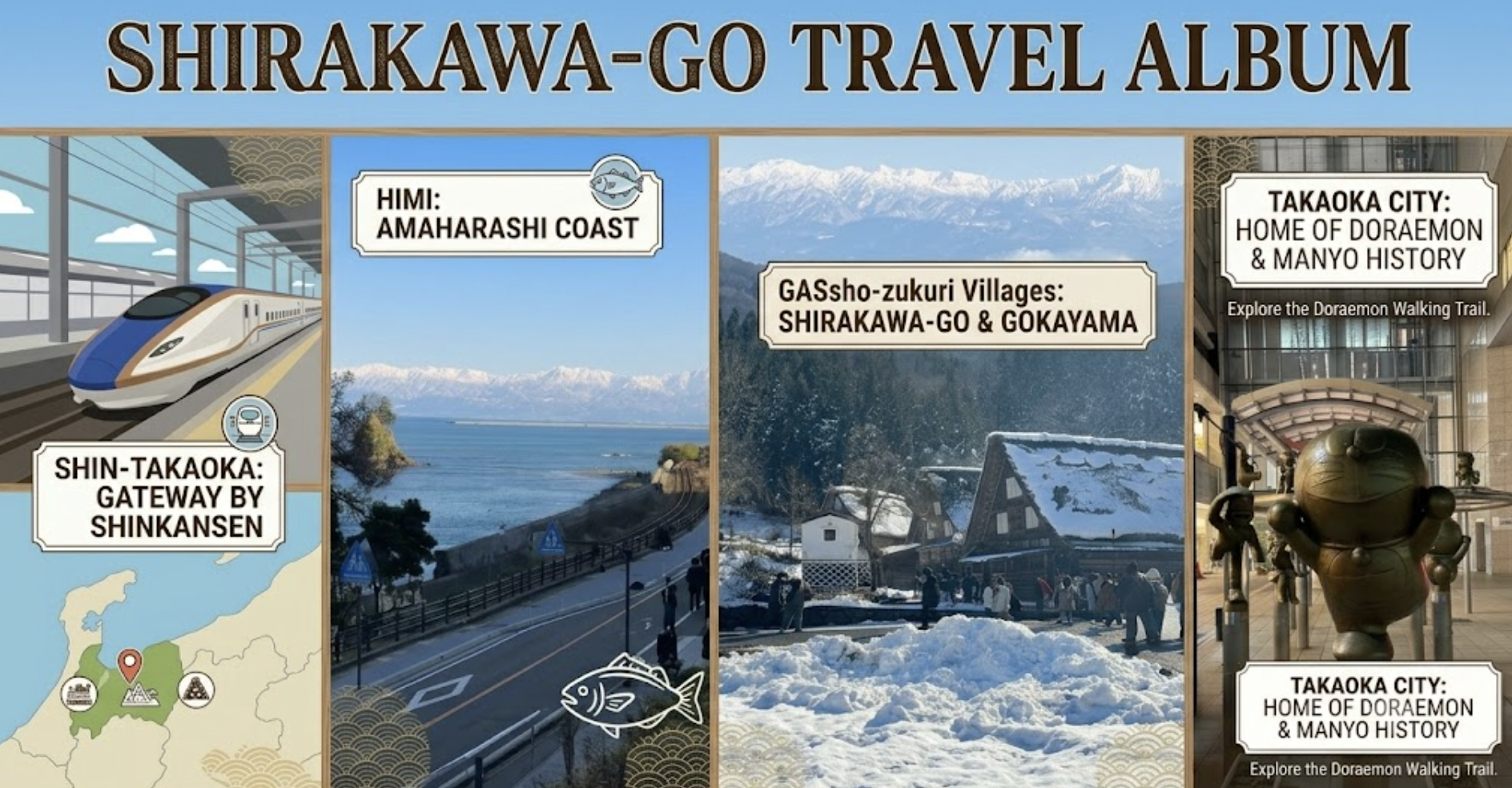
If you’re planning a trip to the stunning UNESCO World Heritage site of Shirakawa-go, you already know the struggle: getting there usually means relying on crowded, managed tour buses from Nagoya, Takayama, or Kanazawa. While convenient, they strip away your freedom to explore at your own pace. I wanted something authentic and real, so I took a different route: Toyama Prefecture. Toyama is an absolute dream, balancing coastal beauty with ancient, snow-covered mountain villages. Plus, it’s legendary for having some of the freshest seafood in Japan. It’s the perfect weekend getaway for shooting amazing footage, enjoying incredible food, and escaping the usual tourist traps. This route is surprisingly accessible via a smooth train ride: 1. From Tokyo: Take a direct train on the Hokuriku Shinkansen straight to Shin-Takaoka Station. 2. From Osaka: It’s a bit trickier but totally doable. Take the Thunderbird Limited Express to Tsuruga Station, then transfer to the Hokuriku Shinkansen to Shin-Takaoka. Takaoka itself is a fantastic small city with great local markets and incredible seafood to fuel up on before heading into the mountains.Himi Line, Amaharashi Coast, Doraemon Walk Path, and Shunsai Tei Yumesaki, a best place for Masu-zushi. The secret weapon for this route is the 2-day World Heritage Bus pass departing from Takaoka Station. Instead of a rigid tour, this hop-on, hop-off route lets you build a flexible itinerary through several incredible spots. You can visit Johana Village, a charming town famous for its traditional streets and silk-weaving history. You can also explore Gokayama, a quieter UNESCO site featuring the same stunning thatched-roof houses as Shirakawa-go, but with a fraction of the crowds. Finally, use your pass to arrive early or stay late at Shirakawa-go, experiencing the main village completely free of the midday tour bus rush.
Lake Yamanaka: The Closest Fuji Five Lake
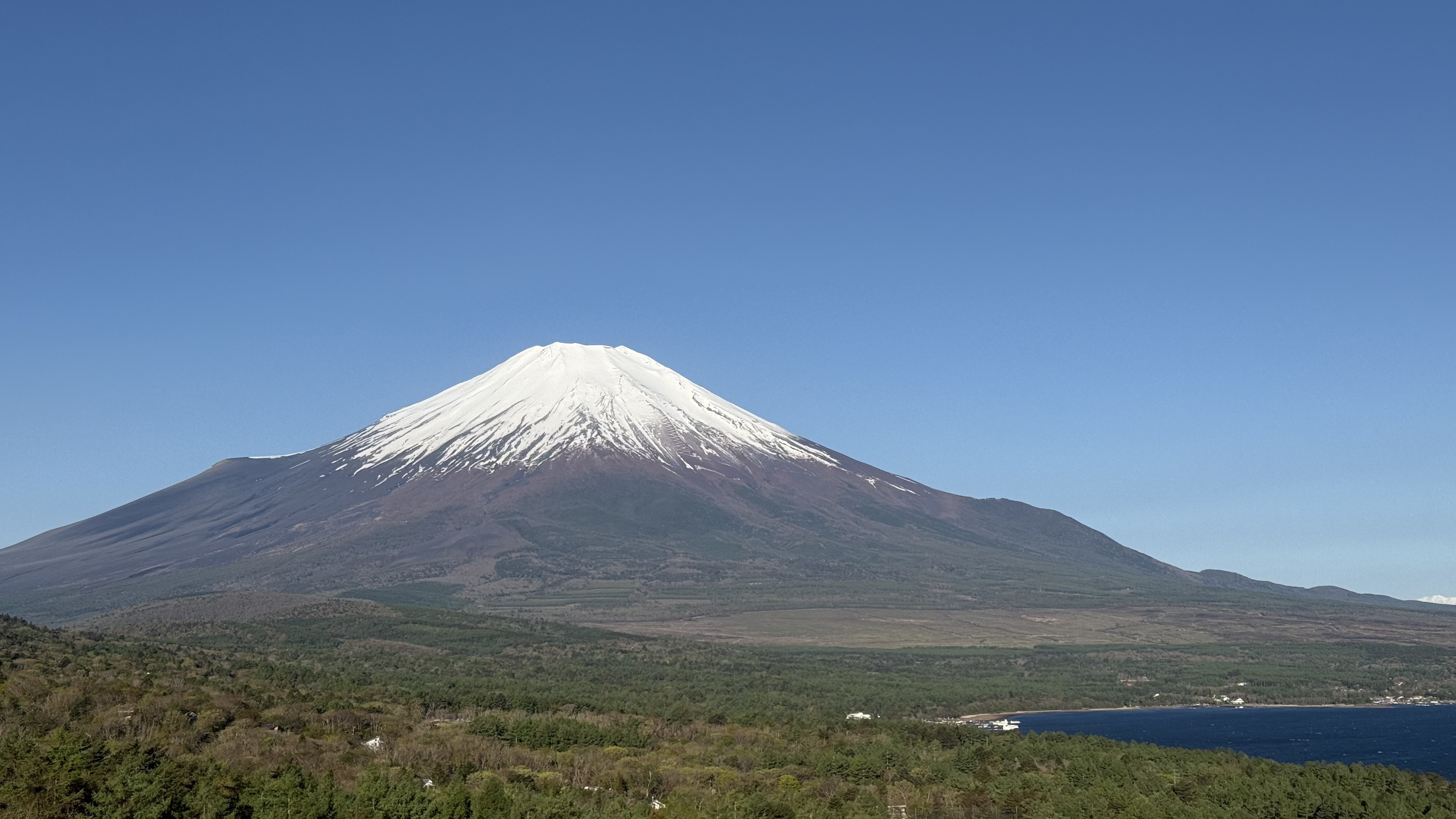
While neighboring Kawaguchiko draws massive international crowds, Lake Yamanaka (Yamanakako)—the largest and closest of the Fuji Five Lakes to Mount Fuji—offers a much more serene, breathtaking alternative. As a professional traveler based in Japan, I recently made the long drive from Osaka up to the Fuji region for a multi-day holiday, and Yamanakako was an absolute highlight of the trip. From cycling along the peaceful shores to witnessing the majestic, unobstructed views of Mt. Fuji at Nagaike Shinsui Park, it is the ultimate scenic escape. In this comprehensive guide, I break down everything you need to know to plan your trip. Unlike the bustling tourist centers nearby, Lake Yamanaka's charm lies in its expansive nature, making it the perfect destination to slow down, breathe in the crisp mountain air, and take in Japan's most iconic mountain. Nagaike Shinsui Park (長池親水公園): If you are looking for the ultimate photograph of Mt. Fuji, this is the spot. Located on the northern shore of the lake, it offers an entirely unobstructed view of the mountain sweeping down to the water. In the calm mornings, you can capture the famous "Double Fuji" (a perfect reflection on the water). The Swans of Yamanakako (白鳥の湖): The lake is famous for its resident whooper swans that glide gracefully near the shores, perfectly complementing the mountain backdrop. Cycling the Perimeter (湖畔サイクリング): Lake Yamanaka features excellent, dedicated cycling paths that run along the shoreline. Biking around the lake takes about 1.5 to 2 hours at a leisurely pace.
.jpg)
Katsuoji: Osaka’s Hidden Temple of Winning Luck and Daruma Dolls
Looking for a unique day trip from central Osaka? Tucked away in the scenic mountains of Minoh, Katsuoji Temple is one of the Kansai region's most captivating hidden gems. Widely known as the "Temple of Winning Luck," this 1,200-year-old sanctuary attracts visitors praying for success in business, exams, and sports. Beyond its spiritual history, Katsuoji is famous for its stunning autumn foliage and the thousands of tiny, red Daruma dolls tucked into every corner of the picturesque temple grounds. Escape the city's neon lights and discover the natural beauty and mystical charm of this unforgettable Osaka destination.
.jpg)
Shirakawa-go
Explore the UNESCO World Heritage village of Shirakawa-go. Discover traditional Gassho-zukuri farmhouses and learn the best ways to visit from Takaoka or via guided tours.If you want to capture footage that looks like it was pulled straight out of a classic Japanese fairy tale, the UNESCO World Heritage village of Shirakawa-go (白川郷) is an absolute must-visit. Nestled deep in the rugged mountains of Gifu Prefecture, this historic village is famous for its traditional Gassho-zukuri farmhouses. These unique structures feature massive, steep thatched roofs designed to withstand heavy snowfall. While it is beautiful year-round, filming these traditional homes blanketed in thick winter snow creates incredibly cinematic, nostalgic video clips. Beyond the architecture, you can spend hours wandering the peaceful village paths, sampling local Hida beef croquettes, and visiting the Shiroyama Viewpoint for a breathtaking wide-angle shot of the entire valley.
Akame 48 Waterfalls: Ninja History and Scenic Hiking in Mie
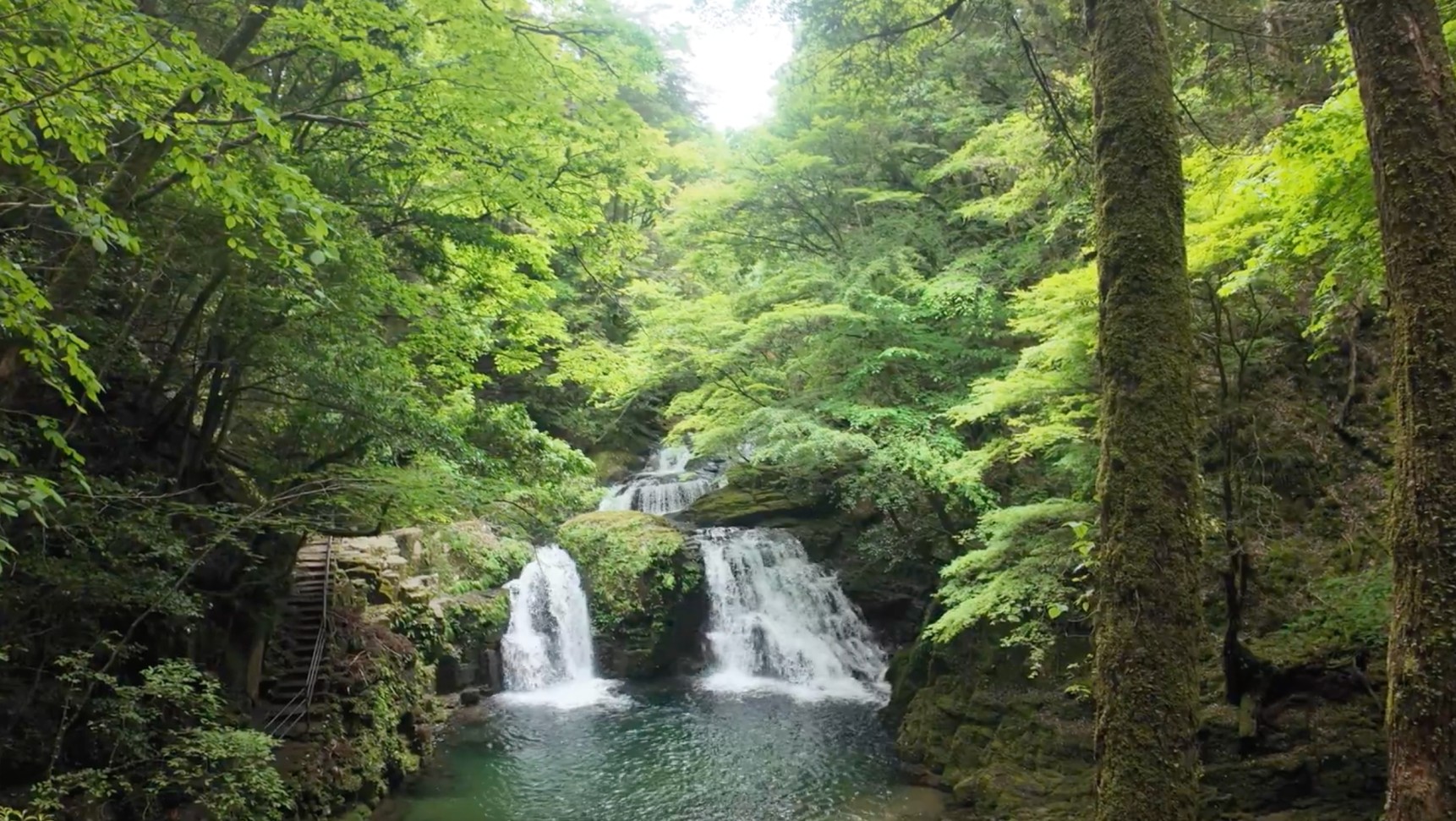
Discover Akame 48 Waterfalls, a hidden gem near Osaka. Enjoy a scenic 4km hike, spot giant salamanders, and explore the birthplace of ninja training in Mie.Looking for an adventurous nature escape from Osaka? Tucked away in the lush mountains of neighboring Mie Prefecture, the Akame 48 Waterfalls (Akame Shijuhachi Taki) offers a stunning 4-kilometer hiking trail weaving through a forested gorge. Known in legend as the historical training ground for Iga ninjas, this mystical valley is famous for its cascading waterfalls, vibrant seasonal colors, and the rare Japanese giant salamanders that call its pristine rivers home. Whether you're chasing waterfalls, crisp forest air, or a bit of ninja history, it’s the perfect hiking day trip out of the city.
Katsuragi Kogen: The 360-Degree Panorama and Azalea Paradise
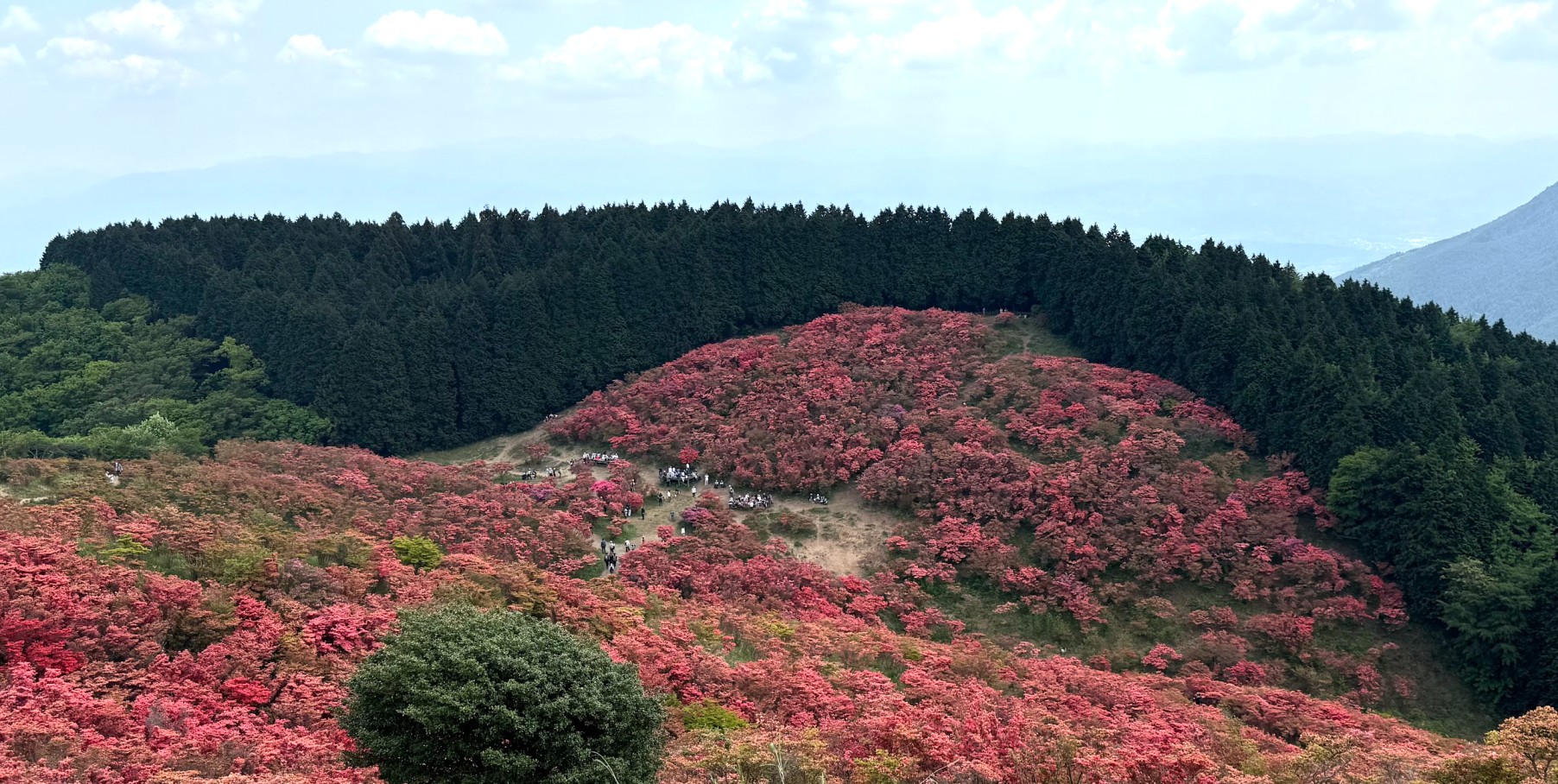
Discover Katsuragi Kogen on the Osaka-Nara border. Hike or take the ropeway for stunning 360-degree panoramic views, spring azaleas, and autumn pampas grass.Looking for sweeping cinematic landscapes? Sitting right on the border of Osaka and Nara, Mount Katsuragi (Katsuragi Kogen) is a visually stunning peak that offers one of the best visual payoffs in the Kansai region. The summit opens up into a massive, rolling plateau providing an incredible, unobstructed 360-degree panoramic view—perfect for wide-angle photography or smooth gimbal panning shots of the sprawling valley below. It's an ideal trail to tackle with a group of friends, famous for exploding with "a million" blooming red azaleas in May and fields of golden pampas grass in the autumn. Whether you hike up the steep trails or catch the ropeway up to capture the golden hour, it is an absolute must-visit.

Shiraito Falls: Mount Fuji's Ethereal Wall of Water
Among all of Japan's waterfalls, Shiraito Falls (Shiraito-no-Taki) in Shizuoka operates on an entirely different level of beauty. Instead of a single river plummeting over a drop, the crystal-clear snowmelt of Mount Fuji filters through volcanic rock layers and springs directly out of a 150-meter-wide curved cliff face, resembling hundreds of delicate white silk threads. Designated as a UNESCO World Heritage site, this breathtaking natural wonder is an absolute must-visit destination in the Mt. Fuji region. In this comprehensive guide, you will find everything you need to plan your trip to this ethereal waterfall. Unlike traditional waterfalls, the geological magic of Shiraito Falls means the water flow remains remarkably consistent and vibrantly clear year-round, maintaining a cool 12°C even in the peak of summer. Shiraito Falls (白糸の滝): The main attraction. A short walk down a paved pathway brings you into a natural basin surrounded by a 150-meter arc of cascading spring water. The sound is a gentle, immersive rustling, living up to its name which translates to "Waterfall of White Threads." Because of its sheer width, standing on the viewing deck feels like being enveloped by a panoramic wall of water. Otodome Falls (音止の滝): Located just a 3-minute walk from Shiraito on the same trail, Otodome provides a stark, breathtaking contrast. While Shiraito is delicate and wide, Otodome is a violent, roaring 25-meter plunge of the Shiba River. The name means "Sound Stopping Falls," a nod to the local legend that its roar was so loud it drowned out all surrounding noise. The Mt. Fuji Backdrop: On clear days, as you walk the upper rim of the falls near the entrance, you can capture the iconic shot of the snow-capped Mt. Fuji towering directly over the lush green gorge.
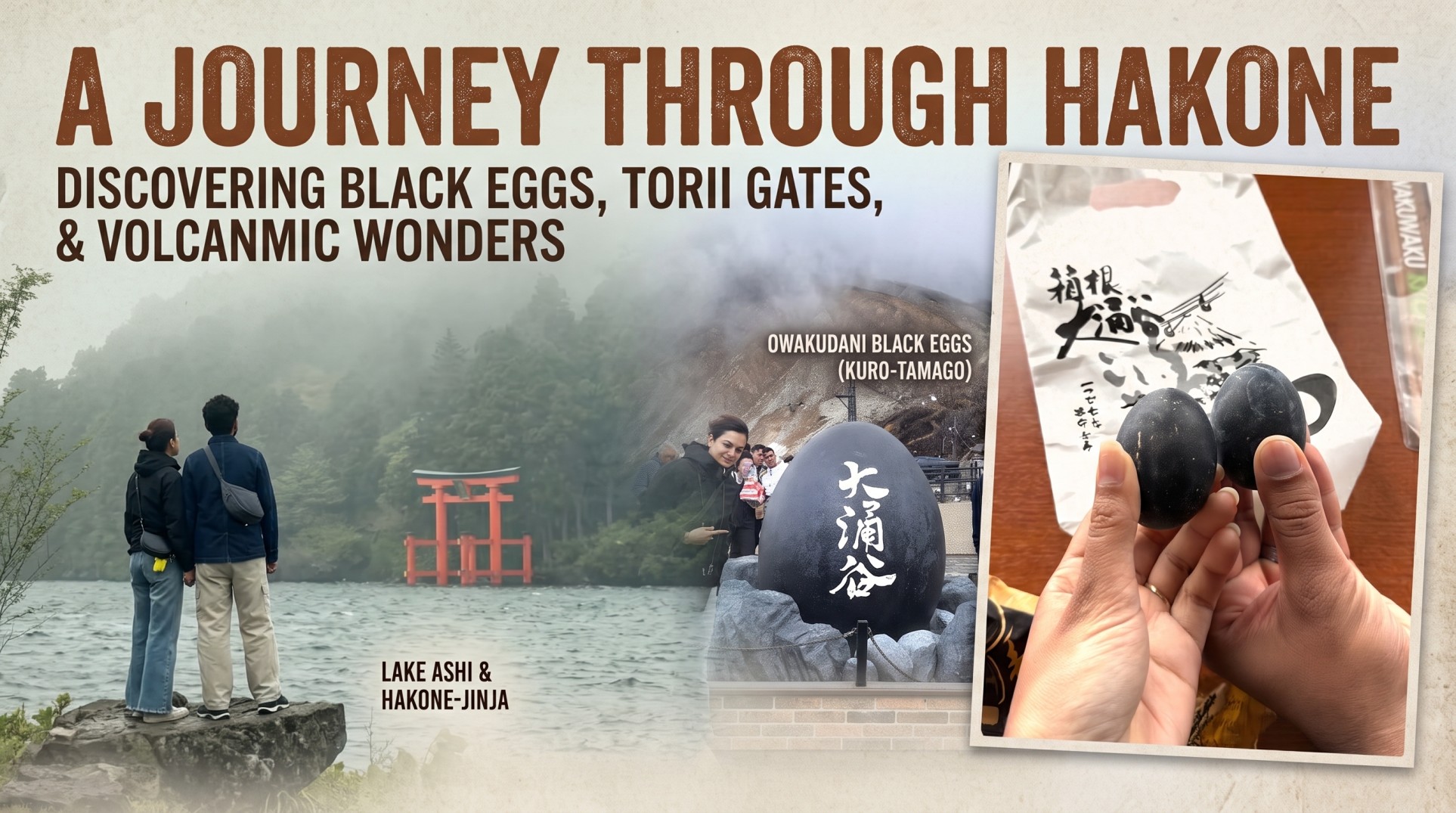
Hakone: The Ultimate Hot Spring
Located just a short distance from Mount Fuji, Hakone is Japan's premier hot spring (onsen) resort destination. It offers a perfect blend of steaming volcanic valleys, serene lake views featuring the iconic "floating" Torii gate of Hakone Shrine, and dense, lush mountains. As a professional traveler based in Japan, driving through the winding mountain roads of Hakone and soaking in an open-air bath after a long day of exploration is an unmatched experience. Unlike standard tourist hubs, Hakone requires a bit of strategic planning to navigate its mountainous terrain efficiently. In this comprehensive guide, I break down everything from the must-see volcanic vents of Owakudani to the exact drive and train logistics from both Kansai and Tokyo. Hakone is a diverse national park that rewards both active explorers and those simply looking to unwind. Owakudani (大涌谷): Known as the "Great Boiling Valley," this active volcanic zone is a sensory experience. You can walk along trails surrounded by rising sulfur steam and bubbling hot springs. Eating a Kuro-tamago (black egg), which is boiled directly in the sulfuric waters, is a local tradition said to add seven years to your life. Lake Ashi & Hakone Shrine (芦ノ湖と箱根神社): Formed in the caldera of Mount Hakone after a volcanic eruption 3,000 years ago, Lake Ashi is breathtaking. The highlight is taking a photo at the massive red Torii gate of Hakone Shrine, which appears to float on the water's edge. On clear days, you can see Mount Fuji perfectly framed behind the lake. World-Class Onsen (温泉): Hakone has been a legendary hot spring retreat for centuries. Whether you stay at a luxury ryokan (traditional inn) or visit a day-use bathhouse (higaeri-onsen), soaking in the mineral-rich waters surrounded by forest views is the ultimate way to recharge.